Dec 19 2025
How I Use Solscan to Read Solana Transactions (and Avoid Getting Fooled)
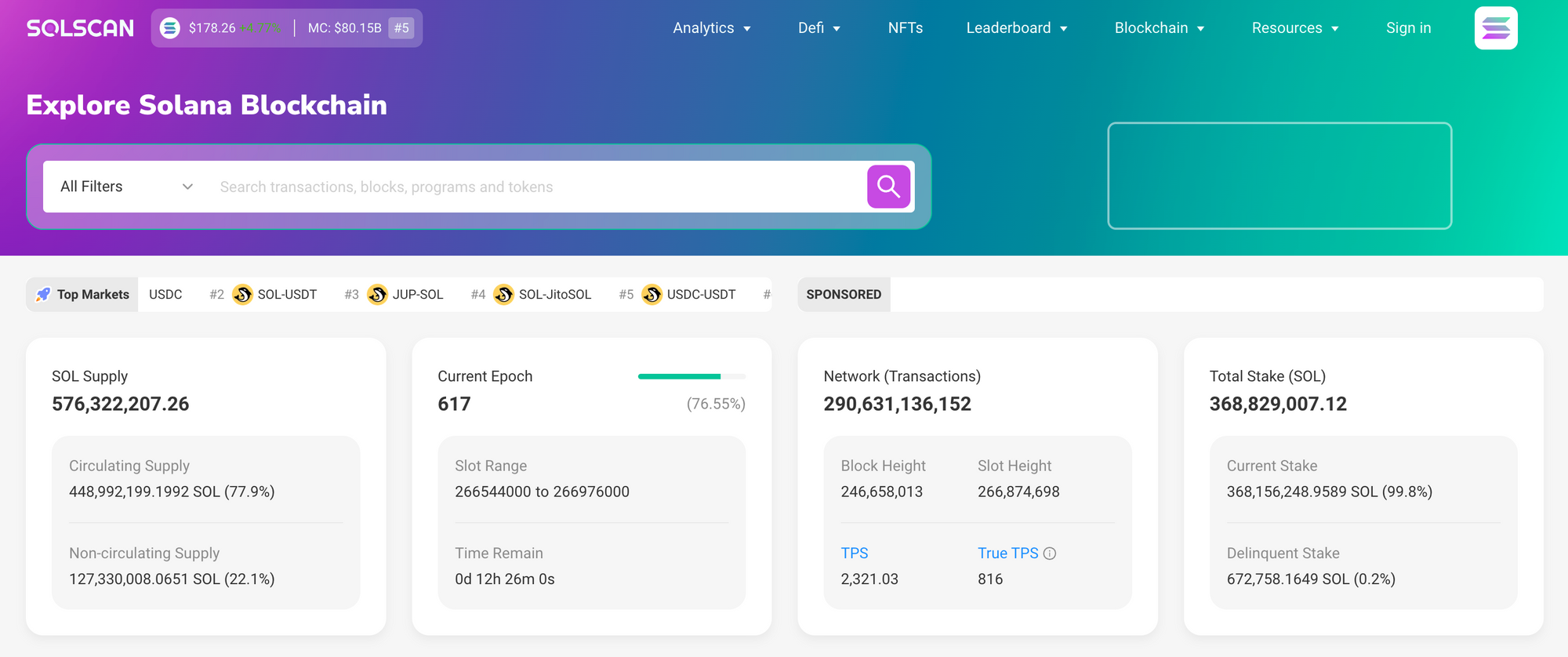
Whoa! This is one of those tools I reach for without thinking. Seriously? Yeah — Solscan has become my go-to when a transaction looks weird or when I’m auditing an account fast. My instinct said it would be clunky at first, but that turned out to be wrong. Initially I thought block explorers were all the same, but Solscan feels different—snappy, focused on Solana specifics, and packed with little utilities that save time when you’re debugging or just curious.
Here’s the thing. When you paste a transaction signature into the search bar, you get more than a timestamp and a success/fail flag. You see fee breakdowns, compute units used, log messages, inner instructions, and sometimes program-specific decoded data. Those logs are where real clues hide. If a transfer failed, the log often tells you whether it was out of compute budget, a token account mismatch, or a program-level revert.
OK, quick practical checklist for reading a SOL transaction. First, confirm the signature is valid and the status says “Success” (or see the error details). Second, look at fee and compute unit usage — unusually high compute can mean a complex cross-program call. Third, expand inner instructions to see token movements that aren’t obvious from the top-level transfer entry. Fourth, read program logs for human-readable messages. Do that and you avoid a lot of guesswork.
Digging into the details — what I actually click
When I open a transaction page I click in this order: signature header (to copy), status and block slot, fee and compute units, then the “parsed instructions” area. If there are NFTs involved (which happens often), I check token mint addresses and the token metadata program traces. (oh, and by the way… don’t trust token names alone — they can be spoofed.)
Something felt off about a recent trade I watched. I thought the DEX swap was straightforward, but then inner instructions revealed a wrapped SOL movement to an intermediary program. My fast read missed that at first. Actually, wait—let me rephrase that: my first impression missed inner program hops, which could mask sandwich attacks or front-runs.
Use the account activity pane to follow money flows. Click an account to see both native SOL changes and token transfers. That way you can trace where funds landed, even across program-derived addresses. Exporting or copying the raw JSON from Solscan’s API is handy if you’re scripting audits or building dashboards. I won’t pretend the API is perfect, but it’s stable enough for scraping balance histories and verifying transaction receipts.
Why care about inner instructions? Because many Solana programs don’t list every token transfer at top-level. Inner instructions reveal the program-to-program dance: token approvals, escrow moves, and metadata writes show up there. If someone says “my tokens were rugpulled” you can sometimes see the exact instruction that burned or transferred token authority—it’s not always obvious from the wallet’s perspective.
How Solscan helps with common Solana pain points
Stuck transactions. Yeah, that happens when the network’s noisy and your fee is low. Solana doesn’t have a mempool like Ethereum, but pending transactions can still behave oddly under congestion. Solscan shows the slot the tx landed in and how many confirmations it has — use that to decide whether to rebroadcast or just let it ride.
NFT transfers and false metadata. This part bugs me: some marketplaces display minted collections that look legit but aren’t. Solscan lets you inspect mint accounts and metadata URIs. If the metadata URI points somewhere suspicious, that’s a red flag. I’m biased, but I always check the mint’s creator list and verify the collection address is the one the marketplace claims.
Stake accounts and delegation. Solscan surfaces stake activation, deactivation, and authority changes. If you’re delegating to validators, you can verify your stake account history and validator vote account details here. It’s a nice, quick sanity check before you trust an interface.
Also: token decimals. Funny little bug — you might think a token transfer of 1000 units is large. But with different decimals it can be tiny. Solscan shows decimals on token pages, so always check that when assessing balances or contract transfers.
Tips for power users (and things I wish more folks knew)
1) Copy raw transaction JSON. Use it for programmatic verification or to replay instruction sequences safely in a test environment. 2) Watch compute units. If a program consistently eats a lot, it might be doing heavy off-chain work or iterating a large data structure. 3) Use the parsed instruction tab to map accounts to meaningful names — that often clarifies intent. 4) When verifying token authenticity, check the mint address and creator list — names are cosmetic.
I’m not 100% sure about every edge case (Solana evolves fast), though I’ve debugged enough transactions to know what patterns repeat. On one hand, a lot of mishaps are user-side (wrong network, wrong token), though actually a surprising number come from poorly audited programs and bad UX in wallets. My instinct says audit logs more — machine-readable logs would help a ton. Somethin’ to push for, maybe.
If you want to try it out yourself, I usually bookmark the official explorer page — https://sites.google.com/cryptowalletextensionus.com/solscan-explorer-official-site/ — and use it alongside an RPC node when I need absolute confirmation. Try comparing Solscan with another explorer sometimes; differences can surface indexer bugs or temporary data lags.
FAQ
How do I verify a transaction succeeded?
Look for the “Success” tag and examine the logs. If it succeeded, you’ll still want to inspect inner instructions for token movements and check compute units and fee to understand why it might have been costly.
Can Solscan show me contract-level errors?
Yes. Program logs often include revert messages or error codes. If the program is well-instrumented you’ll see readable messages; otherwise you’ll see low-level codes (which you can cross-reference with the program source if available).
What if a token transfer looks wrong?
Check token decimals, mint address, and inner instructions. Also review the metadata URI and creators list for NFTs. If unsure, pause and don’t interact until you verify on-chain traces — trust but verify, very very important.